Agency is often described as an individual quality: the capacity to take initiative, make decisions, accept responsibility and act on the world instead of waiting for the world to act first.
That definition matters. But a movement concerned with regional transformation has to ask a second question.
Can a community develop agency too?
Can students, families, schools, colleges, mentors and collaborators learn to see themselves not as separate observers of change, but as participants capable of choosing an important goal and building the means to pursue it together?
Cyber Gold Quest is an attempt to work at both levels.
At the level of the student, it can develop individual agency: I can begin. I can learn what I do not yet know. I can attempt a difficult problem and remain with it until I make progress.
At the level of the region, it can develop collective agency: We can identify a strategic capability, organize around it, produce excellence from here and create a path that becomes stronger with every cohort.
These are related, but they are not the same.
Individual Agency: I Can Act
Andrej Karpathy’s formulation that “agency is greater than intelligence” is useful because it shifts attention from what someone appears capable of understanding to what they are willing and able to do.
Intelligence may help a student recognize a pattern quickly. Agency determines whether the student begins before feeling fully prepared, searches for missing knowledge, tests an idea, studies a failure and returns to the problem.
Cybersecurity challenges make this distinction visible.
A Capture The Flag problem rarely arrives with a complete method. The student has to inspect the system, decide what to investigate, find documentation, try tools, discard weak assumptions and continue without knowing whether the next attempt will work.
The important experience is not being told, “You are capable.”
It is discovering, through evidence, “I did not know how to solve this, but I found a way forward.”
That is individual agency becoming real.
The progression can be simple:
I can enter this field. I can learn what I do not know. I can solve a difficult problem. I can compete at a serious standard. I can help someone else begin.
The medal is not necessary for this transformation. A student who learns to act under uncertainty, recover from failure and take ownership of learning has already gained something valuable for employment, research, entrepreneurship and life.
Collective Agency: We Can Act Together
Collective agency is not simply a large number of individually confident people.
It appears when a community can choose a shared objective, organize different roles around it, sustain action and produce outcomes that no participant could have produced alone.
For Cyber Gold Quest, the shared objective is deliberately demanding: build a cybersecurity pathway capable of eventually producing international excellence.
Students contribute effort and curiosity. Schools create access and continuity. Teachers protect time for clubs and practice. Mentors contribute experience. Colleges can provide deeper technical environments. Families sustain patient preparation. Collaborators connect the pathway to wider standards and opportunities.
None of these contributions is sufficient by itself.
Together, they can become regional capacity.
Collective agency therefore means more than believing that Uttarakhand has talent. It means developing the organized ability to identify that talent, train it, connect it, test it and help it reproduce itself through future cohorts.
The progression at this level is different:
Someone from here can do it. Schools and mentors can create a path. Cohorts can prepare together. Results can improve through accumulated knowledge. Participants can return as mentors. A region can build a capability it did not previously possess at scale.
That is collective agency.
Why Both Forms Are Necessary
Individual agency without collective agency can produce exceptional but isolated stories.
A determined student may still succeed, but every new student has to rediscover the path, find mentors independently and repeat avoidable mistakes. Knowledge leaves with individuals instead of becoming part of an ecosystem.
Collective agency without individual agency creates the opposite problem.
Schools, labs and programs may exist, but students remain passive recipients waiting for instructions. Activity is visible, yet ownership and independent problem solving remain weak.
Cyber Gold Quest needs both.
It needs students who can say, “I will figure this out,” and a community capable of saying, “We will build the conditions in which many students can figure difficult things out.”
One provides initiative. The other provides continuity and scale.
Gold As A Coordinating Objective
International gold is important not only as an award but as a coordinating objective.
A vague ambition such as “improve cybersecurity education” can mean different things to different people. A demanding external standard makes the work concrete. It creates questions that can be answered through action:
- What knowledge does international competition require?
- Where are the current gaps?
- What should students practise first?
- Which mentors and institutions can help?
- What infrastructure is genuinely necessary?
- How will progress be tested honestly?
The summit gives many independent contributors a common direction.
This is why the gold quest can matter even when only a few students reach the final competition. A shared objective can organize seminars, clubs, labs, mentoring, CTF practice, academic preparation and public support into one intelligible pathway.
The Champion As Public Proof
A champion should not be treated as a rare exception who escaped ordinary conditions.
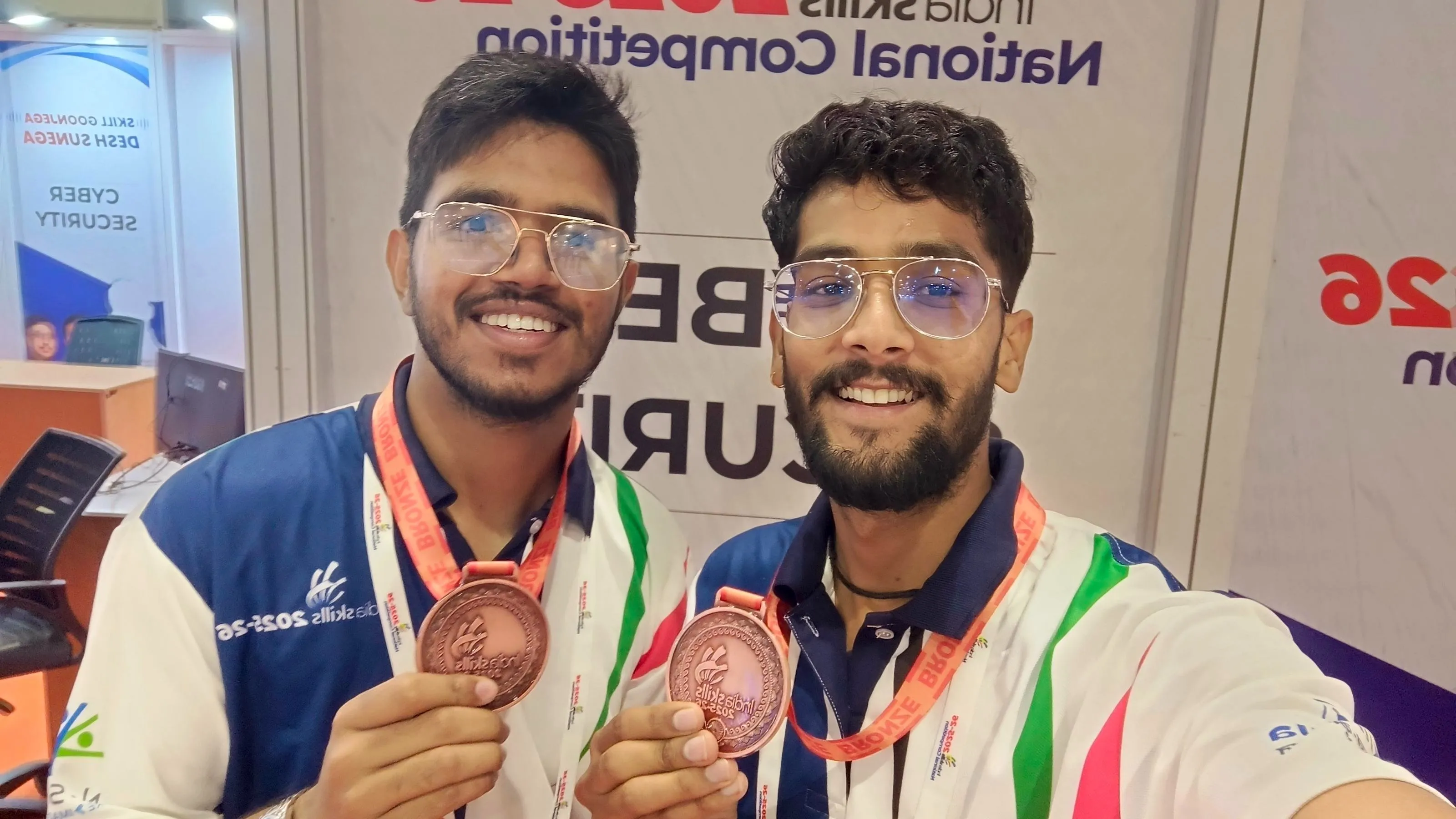
The champion matters as proof that coordinated effort from here can meet a standard set anywhere.
That proof changes more than student confidence. It can change institutional behaviour. Schools become more willing to make time for sustained practice. Parents can see why difficult preparation deserves support. Mentors find a serious mission to join. Younger students encounter a path before their curiosity disappears.
But proof becomes collective agency only when the achievement changes what the community can do next.
If the champion becomes a mentor, preparation improves. If schools preserve what was learned, the next cohort starts earlier. If challenges and learning material are documented, knowledge becomes reusable. If more institutions participate, the pathway becomes less dependent on one person.
The champion is the signal.
The community’s ability to respond to that signal is the deeper test.
Designing Cyber Gold Quest For Agency
If agency is an intended outcome, the programme cannot be built only around instruction.
Instruction provides foundations, but students must gradually receive more responsibility. They should learn to choose tools, divide work, investigate unfamiliar systems, document discoveries, ask better questions and help peers. Mentors should provide direction without removing every uncertainty.
At the collective level, the initiative should make participation possible at several depths:
- Seminars that give many students their first encounter with cybersecurity and CTFs.
- School clubs and lab sessions that turn initial interest into regular practice.
- Structured foundations for students who need technical preparation.
- Serious competition and academic pathways for committed participants.
- Roles for teachers, practitioners, alumni, colleges and collaborators.
- A route through which experienced students can support the next cohort.
This creates a reinforcing loop:
Exposure creates participation. Participation reveals committed students. Practice creates capability. Achievement creates proof. Proof attracts support. Support strengthens the next cycle.
The loop is the practical form of collective agency.
Measuring More Than Sentiment
Agency should not be measured only by whether people say they feel confident.
Individual agency becomes visible when students initiate work, remain with difficult problems, find resources independently, document what they learn and take responsibility for helping a team progress.
Collective agency becomes visible when schools return for another cycle, clubs continue between events, mentors coordinate, practice material accumulates, participants become contributors and each cohort begins from a stronger starting point than the previous one.
The question is not only, “Do we believe we can do this?”
The stronger question is, “What can we now do together that we could not do before?”
From A Medal Mission To Regional Capability
Cyber Gold Quest begins with cybersecurity, but the underlying lesson is broader.
A region develops agency when it learns that it can choose a difficult and valuable capability, connect local effort to national and global standards, organize institutions around patient preparation and improve through repeated cycles of action.
The visible summit is international gold.
The individual transformation is a student who learns, “I can act.”
The collective transformation is a region that learns, “We can build this together.”
That is why Cyber Gold Quest is more than a medal mission. It is an experiment in turning belief into individual initiative, coordinated regional action and durable technical capability.