Rural development is often imagined through roads, buildings, tourism, agriculture, local enterprise and public work. These matter. No serious conversation about development can ignore basic infrastructure, healthcare, education, transport, markets and reliable public services.
But another question must now be asked.
Can research and development become part of rural development?
Not as a decorative phrase. Not as a distant dream of large laboratories appearing overnight. The question is whether hill districts can begin to build the habits, talent and technical communities that allow high-value knowledge work to grow outside the usual metropolitan centres.
This is one of the central motivations behind #InnovateInUttarakhand.
R&D does not begin only when a large campus is built. It begins when students learn to ask sharper questions, test ideas, build prototypes, document failures, compare methods, understand systems and keep improving their work. It begins when teachers and mentors create continuity. It grows when schools can use labs as living spaces for experimentation, projects and continued practice. It grows when public demonstrations, competitions and technical clubs make difficult work visible.
In that sense, rural development through R&D begins small.
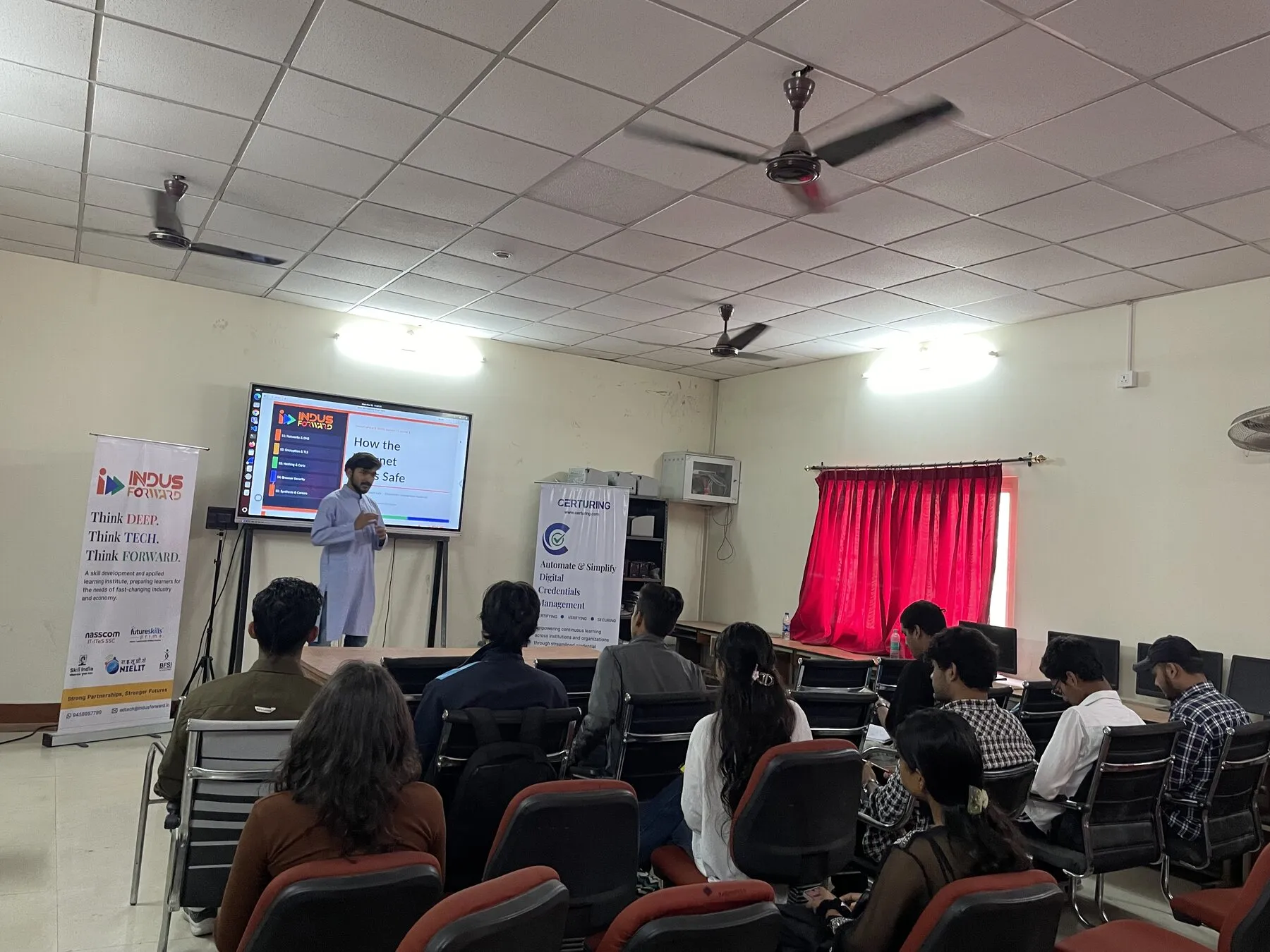
A cyber club in a school is small. But it can introduce students to Linux, networks, web security, digital forensics, cryptography and Capture The Flag practice. A robotics lab is small. But it can connect students to mechanics, electronics, control systems and software. A drone workshop is small. But it can open questions about terrain, mapping, agriculture, disaster response, inspection and public infrastructure. A cloud session is small. But it can teach students how modern systems are deployed, scaled, secured and monitored.
Small does not mean trivial.
Small is often how serious capability begins.
The challenge is continuity. One-time workshops, photo opportunities and short bursts of enthusiasm can be useful introductions, but lasting capability requires repetition. R&D culture requires students returning to hard problems. It requires mentors who can stay connected. It requires schools and colleges willing to support clubs, lab time and public demonstrations. It requires a record of work so that the next group starts a little ahead of the previous one.
This is where Uttarakhand’s character matters.
The hills already understand slow building. Families understand sacrifice. Communities understand distance. Young people understand that difficult terrain must be crossed with patience. Those qualities can become technical strengths if they are joined with the right pathways.
R&D also helps change the meaning of staying connected to home.
For many young people, opportunity has meant leaving. There is nothing wrong with leaving to study, work, learn and grow. The opportunity now is to create more credible paths near home as well, so that students can stay, return, or remain professionally connected with the hills.
Deep technology can create a different possibility.
A student may still study in another city. An engineer may still work for a national or global company. A founder may still serve customers outside the state. But if the student remains connected to local schools, if the engineer mentors a club, if the founder hires from the region, if public examples show that high-value work can be rooted here, the relationship between talent and place changes.
The aim is not isolation.
The aim is connection with more local strength.
Uttarakhand should connect to national and global technology networks with confidence. It should produce students who can enter those networks with strength, learn from them, contribute to them and bring capability back into local ecosystems.
Cyber Gold Quest is an example of this approach. It connects students to national competition standards, global CTF culture and advanced cybersecurity pathways. But its regional purpose is clear: create visible proof that serious cyber capability can emerge from Uttarakhand, then use that proof to bring more students, schools, mentors and collaborators into the path.
The same approach can work in other fields.
Robotics and drones can connect hill students to terrain-aware engineering. Cloud computing can connect them to the infrastructure of modern digital services. AI can connect them to data, software, evaluation and judgement. Engineering projects can connect them to local problems: water, roads, disaster response, agriculture, logistics, healthcare access, education delivery and environmental monitoring.
R&D is not only about publishing papers or filing patents, though those may come later. At the beginning, it is about disciplined curiosity.
What problem are we solving?
What have others already tried?
What do we not understand yet?
How will we test this?
What failed?
What did we learn?
How can the next student begin from here instead of starting from zero?
These questions are development questions as much as technical questions. They create a culture that values evidence, patience and improvement. They train students to become useful in any serious field.
This is why schools are central.
If students encounter serious technical work only after college, many will already have narrowed their imagination. If they encounter it in school through seminars, labs, clubs, public demonstrations and mentoring, they gain time. They can experiment earlier. They can fail earlier. They can discover interest earlier. They can build foundations before competitive exams, degree choices and career pressure become overwhelming.
Schools do not have to do everything alone. The movement can support them through collaborations, lab setup, curriculum guidance, competitions, mentoring, seminars and public events. Colleges, alumni, companies, practitioners and local leaders can contribute too. The important thing is that students see a pathway, not only an event.
Rural development through R&D is not a quick promise. It is a long discipline that can grow alongside the work already being done through roads, tourism, agriculture, education, public service and local enterprise.
It asks a region to build capability before demanding recognition. It asks students to learn deeply before seeking applause. It asks mentors to repeat foundational work. It asks schools to treat technical practice as a serious part of formation. It asks the public to value patient work.
If this culture grows, it can change the future of hill districts.
Not by pretending that geography does not matter.
By building forms of capability that geography cannot easily limit.